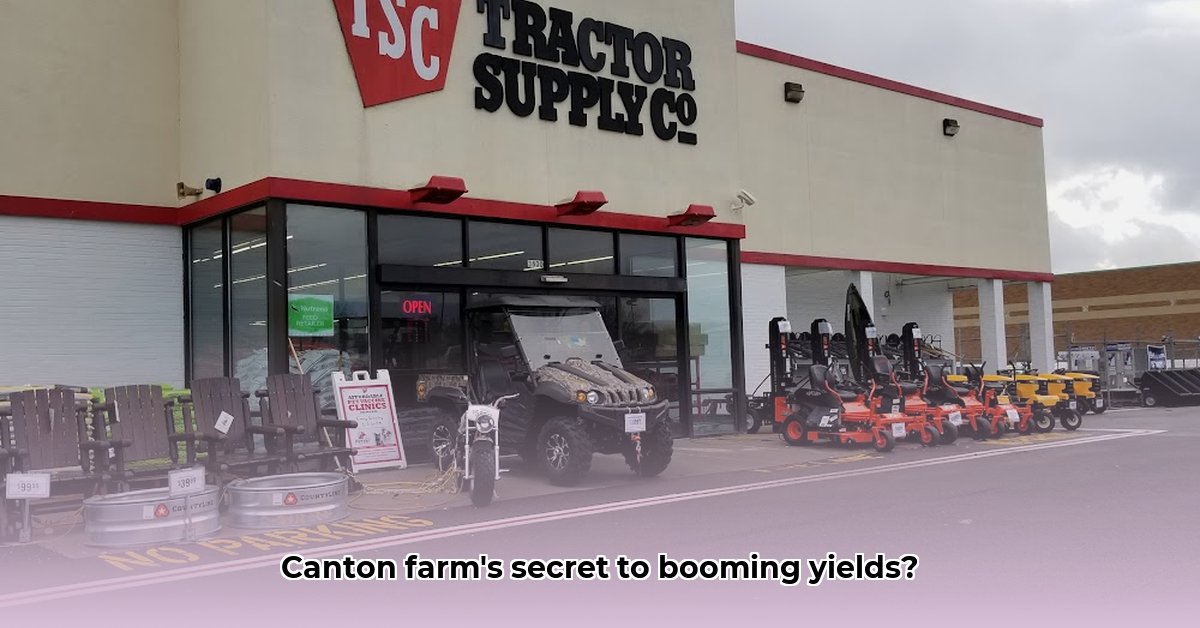
Tractor Supply Canton, MI: A Boon or Barrier to Sustainable Farming?
Canton, Michigan's burgeoning interest in sustainable agriculture presents a compelling case study. With a growing emphasis on locally sourced, environmentally friendly farming practices, Tractor Supply (TSC) in Canton holds a potentially pivotal role. But does this conveniently located retailer truly support the needs of local farmers aiming for sustainable practices? This analysis investigates TSC's impact, considering accessibility, product range, community engagement, and stakeholder perspectives. For comparison, see the Davison Tractor Supply
Access and Limitations: Location vs. Selection
TSC's Canton location offers undeniable convenience for residents. Its accessibility benefits both serious farmers and home gardeners interested in sustainable agriculture methods. However, its geographic reach is limited to Canton and its immediate vicinity. This raises the crucial question: Can a single store adequately meet the diverse needs of a broader region striving for sustainable farming practices? Given the potential demand, one might ask, is this sufficient to support the growing interest in sustainable farming throughout the region?
Product Range & Community Engagement: Beyond the Shelves
The precise range of products at the Canton TSC remains unclear. A comprehensive inventory listing explicitly detailing organic seeds, water-efficient irrigation systems, and eco-friendly farming tools is currently unavailable online. This lack of transparency hinders a thorough assessment of its contribution to sustainable agriculture. The absence of this information prompts the question: Does TSC provide the specialized supplies necessary for truly successful sustainable farming?
Despite this, the store's proximity to community centers offers substantial potential. Imagine workshops on composting, seed saving, or even collaborative community garden projects with local schools. This suggests a significant untapped potential for TSC to become a focal point for educational outreach and community building focused on sustainable agriculture within Canton.
Stakeholder Perspectives: A Multifaceted View
Several key stakeholders influence and are influenced by TSC's role:
| Stakeholder | Interests and Goals |
|---|---|
| Tractor Supply Company | Profit maximization, market share growth, customer satisfaction, and potentially enhancing their brand image through sustainability initiatives. |
| Local Farmers | Reliable access to high-quality and competitively priced, sustainable supplies. |
| Canton Municipality | Promotion of sustainable farming, community development, and economic growth. |
| Consumers | Access to supplies, education on sustainable practices, and affordable options. |
The shared goal is a thriving, sustainable local agricultural system. The effectiveness of TSC in facilitating this goal warrants further investigation.
Challenges and Opportunities: Navigating the Landscape
Several factors could limit TSC's contribution to sustainable agriculture in Canton. Competition from other agricultural suppliers is a significant hurdle. The pre-existing farming landscape and sustainability concerns surrounding TSC's own supply chain (sourcing, transportation) also require attention. However, substantial opportunities exist. Expanding its range of sustainable products and actively engaging with the community through educational initiatives could significantly enhance TSC's positive impact.
Conclusion: Collaborative Action for Sustainable Growth
To maximize TSC's contribution, several key steps are crucial. Consumer surveys could identify unmet needs concerning sustainable products. Transparency regarding TSC's sustainability efforts (e.g., sourcing, waste reduction) is paramount to fostering trust. Local farmers can advocate for a wider selection of supplies. Ultimately, collaboration between TSC, the Canton municipality, and the broader community is essential to build a thriving, environmentally friendly agricultural ecosystem. The potential for positive change is considerable; its realization demands a collective effort. The journey towards sustainable agriculture requires a shared commitment and integrated approach from all stakeholders.